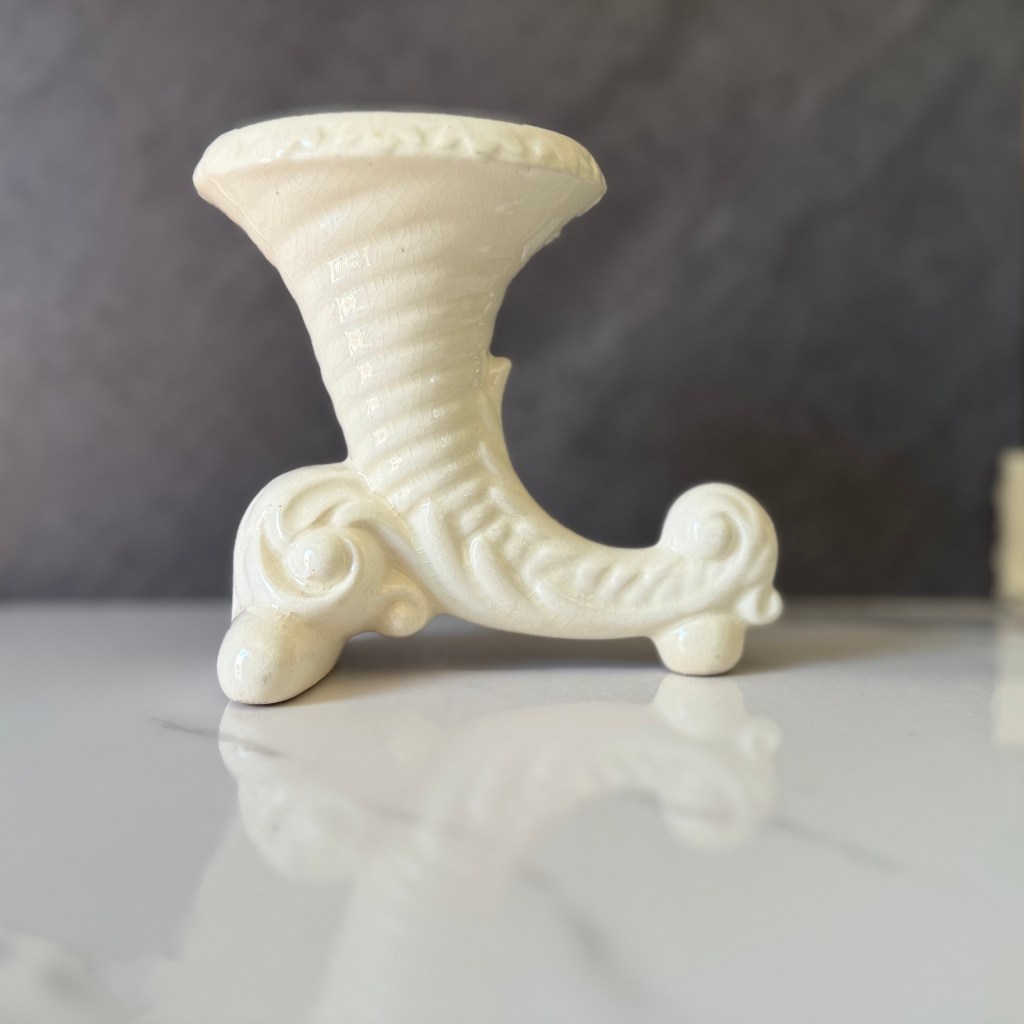
Many of today’s “recycle generation” shoppers care deeply about sustainability, saving money, and keeping things out of landfills — but often say, “I’m not a collector.” That’s okay! You don’t need to be a collector to appreciate the beauty and value of vintage things. Accepting an heirloom dish, a well-loved chair, or a piece of handmade pottery is a small but powerful act of gratitude — to your family, to craftsmanship, and to the planet.
The Heart Behind the Gift
When your mom or granny offers you a vintage teacup or an old dish, she’s really sharing a piece of her story. Each item carries memories and care. Saying yes to that gift keeps it in motion — a living connection between generations.
Even if your home leans modern or minimal, one vintage bowl or a mismatched goblet can add warmth and humanity to your space. It’s not about creating a “theme”; it’s about creating character.
Waste Not, Want Not: The Sustainability Angle
Buying new has hidden costs — energy, materials, shipping, and waste. Choosing reuse over recycling is a stronger environmental choice, since it doesn’t require extra processing or energy. As Ambient BP notes, repurposing items for home design can be one of the simplest ways to reduce your footprint while keeping your space unique (ambientbp.com).
Designer Emily Henderson has also written about how decorating can easily become wasteful — and how buying vintage or secondhand is one of the best ways to design with purpose (stylebyemilyhenderson.com).
When you say yes to a vintage dish or small heirloom, you’re not just saving money — you’re helping keep beautiful, functional objects out of landfills.
Design That Doesn’t Require Perfection
Worried things won’t “match”? Don’t be! Even Martha Stewart encourages blending styles and eras in her table settings. Her features on entertaining show that a “mish-mash” of glassware, dishes, and colors can look effortless when tied together with a unifying touch — like a tablecloth, centerpiece, or repeated accent hue (marthastewart.com).
She’s also famous for her “Color It Black” theory — painting mismatched furniture a single color to bring cohesion and sophistication to a mixed collection (homesandgardens.com).
The takeaway? Design with confidence. Harmony comes from creativity, not uniformity.
Eclectic = Collected, Not Chaotic
Eclectic design is about intention — gathering what you love, not just what matches. As one interiors blog put it, the goal is to make your home feel collected, not just decorated (dabblinganddecorating.com).
A few easy ways to make it work:
- Use a shared color, finish, or texture to connect different pieces
- Rotate what you display so each treasure gets its moment
- Let blank space balance out bold items
- Share the story — where it came from, who gave it, and why it matters
When you live with things that have meaning, your home automatically becomes more authentic and welcoming.
No Regrets
The most common regret isn’t “I bought the wrong thing.” It’s “I wish I’d kept Grandma’s thing.”
Be gracious. Accept the gift. Use it, hang it, love it — even if it’s a little quirky. You might be surprised how easily it fits into your life and how deeply you’ll cherish it years from now.
Don’t be shy about mixing the old with the new — that’s where the magic (and memories) live.
*Research compiled from cited sources and personal commentary
Keywords: vintage home decor, sustainable design, upcycled interiors, mismatched tableware, eclectic decorating, heirloom gifts, reuse over recycle, Martha Stewart style, secondhand design
Hashtags:
#VintageDecor #SustainableLiving #EclecticStyle #MismatchedDesign #VintageGift
 Nans Haven Antiques & Collectibles
Leave a comment